
The History of Shillingstone Station
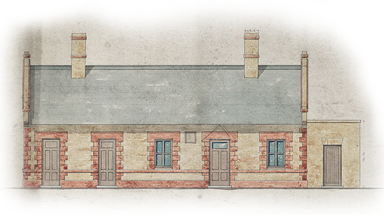
Shillingstone Station was built and opened by The Somerset & Dorset Railway (S&DR) on 31st August 1863. The S&DR came into existence on 1 September 1862 as a result of the amalgamation of the Dorset Central Railway (DCR) and the Somerset Central Railway (SCR). At the time of the amalgamation, the DCR line ran from Wimborne Minster to Blandford Forum and from Templecombe to Cole near Bruton leaving a gap between Blandford Forum and Templecombe. The newly formed S&DR filled this gap by the summer of 1863 with one of the new stations in the gap being at Shillingstone.

On 20 October 1899, the future King Edward VII, (whilst he was still the Prince of Wales), made one of his many visits to Lord Wolverton’s estate for the shooting. On that particular occasion, he was accompanied by Grand Duke Michael of Russia and the Earl of Dudley. It was as a result of the Prince of Wales’s visits that the station acquired its ornate canopy, unusual for such a small station but considered necessary to protect the royal guest from inclement weather.
King George V and Queen Mary

On Monday 5 December 1904, the future King George V, (whilst he was still the Prince of Wales), together with his wife, the future Queen Mary, made a visit to Lord Wolverton’s estate at Iwerne Minster for the shooting. They travelled from Waterloo Station to Templecombe where they changed to the S&DJR for the final stage of their railway journey to Shillingstone Station. They were accompanied by, among others, the Earl of Mar and Kellie Lord Stanley and General Arthur Paget. They returned to Buckingham Palace on 9 December 1904.
Rupert Brooke

Overlooked by the ancient hill-fort of Hambledon Hill, with the River Stour meandering by in the foreground, Shillingstone was probably the most picturesque station south of the Mendips on what was to become the Somerset & Dorset Joint Railway (S&DJR) in 1876.
Looking Forward