
The History of Shillingstone Station
Although Shillingstone Station was built by the S&DR, it was to a DCR design and as such is the only surviving DCR designed station and is consequently of architectural and historical significance. Little change took place to the station building over the years; it was slightly extended in the early part of the 20th century with the addition of a station master’s office and a canopy. The station remained in that condition until the Beeching cuts of 1966 brought traffic on the line to an end with its closure.
Famous visitors
Over the years, the station has been used by many famous people
William E Gladstone
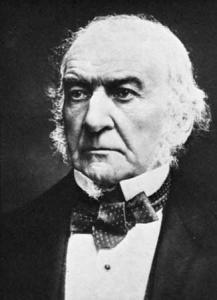
William E Gladstone arrived at Shillingstone Station on 23 August 1882, departing three days later for Downing Street. He had been visiting Lord and Lady Wolverton at Iwerne Minster and Viscount Portman at Bryanston.
King Edward VII
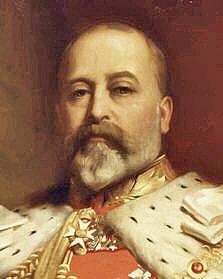
On 20th October 1899, the future King Edward VII, (whilst he was still the Prince of Wales), made one of his many visits to Lord Wolverton’s estate for the shooting. On that particular occasion, he was accompanied by Grand Duke Michael of Russia and the Earl of Dudley. It was as a result of the Prince of Wales’ visits that the station acquired its ornate canopy, unusual for such a small station but considered necessary to protect the royal guest from inclement weather.
King George V and Queen Mary
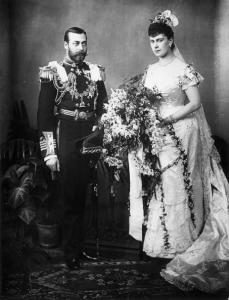
On Monday 5th December 1904, the future King George V, (whilst he was still the Prince of Wales), together with his wife, the future Queen Mary, made a visit to Lord Wolverton’s estate for the shooting. They travelled from Waterloo Station to Templecombe where they changed to the S&DJR for the final stage of their railway journey to Shillingstone Station. They were accompanied by, among others, the Earl of Mar and Kellie Lord Stanley and General Arthur Paget. They returned to Buckingham Palace on 9th December 1904.
Rupert Brooke

With the outbreak of World War I, the poet Rupert Brooke joined the Royal Naval Volunteer Reserve and was stationed nearby at Blandford Camp. From there, he and his battalion marched to Shillingstone Station where they boarded a train to Avonmouth and then on to a troop ship bound for Gallipoli. He never returned, having died from an infected mosquito bite, aged 27, while on board the ship.
 The station building survived with several different uses and owners until the late 1990s. The building was gutted and used successively by two furniture companies on lease from Dorset County Council the last going into liquidation in 1998. After several years of uncertainty as to its future, the station was leased to The North Dorset Railway Trust in 2005 for 99 years.